Immersive Visualization
The Augmented Anesthesia Machine Visualization and Interactive Debriefing System (AAMVID)
Video Overview : AAMVID
Through
Mixed Reality (MR), collocated After Action Review (AAR) allows
users to review past training experiences in situ with the user’s
current, real-world experience. MR enables a user-controlled egocentric
viewpoint, a visual overlay of virtual information, and playback of
recorded training experiences collocated with the user’s current
experience. Collocated AAR presents novel challenges for MR, such as
collocating time, interactions, and visualizations of previous and
current experiences.
We
created a collocated AAR system for anesthesia education, the Augmented
Anesthesia Machine Visualization and Interactive Debriefing system
(AAMVID). The system was evaluated in two studies by students (n=19)
and educators (n=3). The results demonstrate how collocated AAR
systems such as AAMVID can: (1) effectively direct student attention
and interaction during AAR and (2) provide novel visualizations of
aggregate student performance and insight into student understanding
for educators
Publications
Team Members
The AAM project is multidisciplinary project including researchers from the following fields:
HCI / Mixed Reality
John Quarles, Ph.D. Student, UTSA CS
Benjamin Lok, Assistant Professor,UF CISE
Modeling and Simulation
Paul Fishwick, Professor, UF CISE
Anesthesiology
Samsun Lampotang, Professor, UF Dept of Anesthesiology
Psychology
Ira Fischler, Professor, UF Dept of Psychology
For more information, contact: John Quarles - jpq@cs.utsa.edu
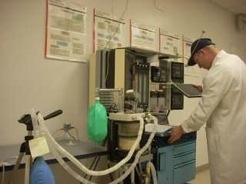
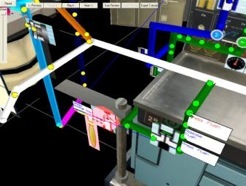
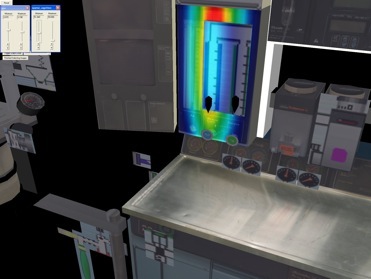
Figures: Left: visualization of aggregate student gaze data. Right: a student performs a collocated after action review of an expert’s past experience.
If people could rewind life and review our mistakes, they might be able to make better decisions in the future. To enable this, we created an immersive visualization approach. We engineered a Mixed Reality-based system that enables users to review past experiences. Users can review a single past experience or many experiences aggregated together.